Saturday, August 11, 2012

One Week Later


             I have been home now for a little over one week. As I tell more and more people about my experience in Haiti I notice each time I put a more positive spin on it. Each passing day I idealize it more and more. I almost forgot about our rodent roommates and the lizards that splattered on the floor. Clearly I need to write this post before I romanticize my recollections.
            This summer was 100% a worthwhile experience. I learned A LOT about development, public health, NGOs and myself.
           
For most of the summer I felt like I was swimming upstream against a tidal wave. While I hope I helped a fish or two along the way, what I really want to be do is change the direction of the current. That is frustrating! Changing the direction of neoliberal economics is not an easy feat. We are living the results of colonization, debt, “free” trade and reaganomics.
            Swimming upstream doesn’t begin to cover it. The insignificance of 1 person, 1 internship, 1 organization and even 1 country makes you feel like you are caught in a whirlpool. Hopefully people smarter than me can think of a way to stop it. Honestly I’m not that optimistic. What can anyone do to reverse centuries of oppressive poverty? It’s not just Haiti and it’s not just the developing world; people in every country are caught in the current.
            Maybe everything we do to make the slightest upstream headway is just delaying the inevitable rock bottom. Marxist ideology would say that rock bottom is the precursor to the revolution. Its easy for me to toot that horn; I have little faith that an economic revolution will happen in my lifetime so in the meantime I get to live my life in a system that works for me because I’m at the top of the political food chain.
            The umbrella lesson of this summer that I don’t know shit, and I want to do the right thing but I have no idea how and that paralyzing, because I saw the results of good intentions gone wrong and its devastating.

            At the same time my summer was wonderful. It was rewarding to collect data and see the numbers that validate my beliefs about poverty and development. I met interns who excite me with their dreams and views of the world. I got a taste of what it means to live in a country like Haiti. I understand political economics in a way I never grasped in the classroom. I appreciate that public health indicators depict vivid pictures about people and their place in the global hierarchy. In that way my experience this summer was invaluable. I had to stop thinking about it as something I was doing to help others and see it as a crucial point in my personal development. I have had to accept that over and over again; every time I try to help others I end up helping myself. All I know is that after this summer I need to think long and hard about what I want to do with my life, what I want to invest my time in and how I want to spend my money.

Tuesday, July 31, 2012

out-of-compound experience


            My Haiti summer 2012 is coming to a close, and that means its adventure time. Why wasn’t the entirety of Haiti summer 2012 adventure time? That is the question I have asked myself every day. Maybe it’s the people I am with, maybe it’s the people I am working for. Maybe it’s our location or maybe it’s the financial cost of adventure. Maybe I need to accept that I’m way more boring than I like to think. Most likely it is because I have been spending so much of my time at the beckon call of my intestines. Whatever the reason, it has not been the constant adrenaline rush I remember from my last time in Haiti.
            Recently that has improved; we have had out-of-compound experiences. I would not trade leaving the compound for anything! (except maybe a salad or a plate of veggies right now…its been too long) However, that does not mean that my out-of-compound experiences were all good. I had fun each time, but they often left me feeling confused or upset or generally irritated. Unpleasant things happen. I see things that make me uncomfortable and sad.
            Last weekend we went to a club in Petionville. It was one of the greatest nights of the summer. We ate pizza and french fries and drank rum sours and danced until 4 am. But this club was frequented by ex pats, pimps and prostitutes. Trafficked teenage Dominican girls approached “humanitarian” ex pats. “150 if you see something you like” said the pimp to one intern. 150 what? American dollars? Doubtful. And I wonder how much of that 150 the women get to keep. Based on some research, it seems that the pimps use most of that money to buy fake breasts and lips and weaves for these women. Somehow that is the same as actually paying the women for their work. As the night wore on the women seemed more desperate for attention. It made me wonder what lay in store for the women who were unable to make a sell that night. It depends what kind of pimp this man is. Is he the kind that keeps them all in line through violence or though brainwashing “kindness”?
No one can fake that exuberant flirtatious happiness without some help; prostitutes using uppers is not a new concept. And no one wants to pay for sex with a sad prostitute; with a prostitute who actually seems upset that she has been sex trafficked. That tends to ruin the illusion.
            And why were the most sought after prostitutes from the DR? Is it because they have lighter skin eyes and hair than the Haitian prostitutes? Their pimps knew how to pick teenage girls who would attract that target rich white audience. The global politics of beauty are such that these women struck the perfect balance between western ideals of beauty and exotic eroticism. Good marketing.
           
Another out-of-compound experience: arguing with the guard at the lake about charging white people more to get in. Our van was divided. Was this reverse racism? Was it wrong? Was he stupid to assume we would be dumb enough to pay more? Was he a smart businessman who had successfully “exploited” NGO workers in the past? Personally I do not feel comfortable using the word exploited in this manner, especially in a place where exploitive economic policies have been so devastating. Can you blame this guard for trying to get a little extra from rich white people? How do you think rich white people got rich?
True, most of us do come from really hard working families. Maybe no one in our family histories intentionally exploited the developing world, but everyone born in the U.S. benefits from these economic policies in some way. That is a privilege we have, and a result of that is people will try to take some of our money. I doubt anyone in our van would rather be on the other side of things.
And there was one in-compound experience worth mentioning. The party with the gun. No one is sure of the specifics but there were shots fired, scared interns, a policeman and lots of stress eating. I don’t know why this didn’t have greater impact on me. I was much more upset about the two other events. I just wanted to keep eating birthday cake and dancing, so that is what I did. I figured the same thing is not going to happen twice in the same night; after the angry man left I felt like it was safer than usual.
            Sex trafficking and neoliberal economic policies scare me more than a rando with a gun. That probably seems naive to some people, but it’s the way I feel. Guns are scary, no doubt. But for me, the oppression that stems from sex slavery and exploitive economics is worse, and it hurts exponentially more people. 

Saturday, July 21, 2012

Q44 Would you like you learn more?


             As  a Jewish American feminist from a liberally arts college, I have to check myself when it comes to family planning. Trying to be culturally sensitive in 80% catholic but 100% very religious Haiti has been a challenge. I don’t want to push my agenda, but I do think family planning is incredibly important. Unfortunately, Higher up in the Haitian-American Caucus hierarchy they seem to be resisting sexual health trainings. I think a direct quote was “we don’t want some kid going out and giving HAC a bad reputation.” (I tried not to take that one personally) Again and again sexual knowledge and health have been put in the backseat.
            Whatever. I’m right. Three things happened recently that vindicated me. 1) The women’s focus group mentioned several times the need for smaller families. 2) The men’s focus group specifically asked to learn about different types of birth control. 3) So far I have entered the data from about 100 needs assessment surveys.  Q44 is “Would you like to learn more about family planning options?” EVERY SINGLE PERSON said yes.
            It makes sense. People here know first hand the cost of having a child. So many larger issues could be addressed by having more manageable family sizes. Family planning is one of the most obvious ways to increase financial security. So yeah. I’m right.
            On a less self-congratulatory note, the surveys have been incredibly sad and happy and interesting and important. I’m so glad to be working on something I believe in.
One single mother lives with 8 children. They have no source of income and none of them have ever been to school. I only entered data of one family with a refrigerator. About 90% indicated that violence against women is a problem in the community. They circled hitting, kicking, molestation and rape as examples they have experienced or witnessed. What infrastructure exists in Haiti to address issues of gender based violence? I highly doubt there is a rape crisis center anywhere near here, and if there was, there is no transportation. The justice system is a joke, that is the main reason there is a travel warning out for Haiti.
            There are families that drink untreated water from the “rivers” that run through trenches of garbage, but most people circled response 7; they buy their water. That’s why disposable water packets litter the streets, or in fact the trenches where less fortunate people get their water.
            Obviously we will wait until the surveys are complete to draw any conclusions; these are just some preliminary observations.
            And I’m right about family planning. It’s the path that makes the most sense for progress, I swear to god. Quote me on that. 

Wednesday, July 18, 2012

Larry


This is a story about a parasite named Larry. Larry is quite the lady-killer.

This story is not based in fact, but it is based in reality. It is based on experience and guesswork from many non-medical-professionals.
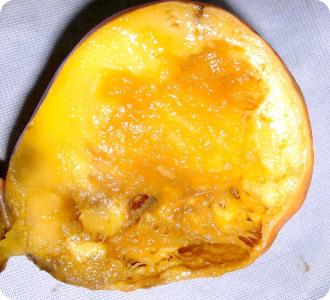
We believe that Larry originally entered the body of a lovely blond intern through a questionable mango.

From that point his charm and charisma spread. Not only through the body of said intern, but onto door handles, faucets, water bottles, and into the bodies of other lady-interns. Larry doesn’t discriminate; all lady-interns are equally vulnerable to his charms.

That being said, Larry does have a special relationship with each of us. The lovely blond intern is in a long-term relationship with Larry. She can’t seem to get out of it no matter how much anti-parasitic medication she takes. Our resident ginger was lucky enough to have Larry interacting with two holes.
It comes as no surprise to me that my personal relationship with Larry was short and intense. Fevers and chills racked my body; I was constantly dripping cold sweat. At one point the feelings were too much to handle; I passed out and came to in child’s pose on the concrete.

The moral of the story is that we need to get out of these destructive relationships. We deserve more than Larry. 

Sunday, July 8, 2012

a skirt & combat boots


          Haiti is a country of extreme contrasts. This is something the interns have been talking about a lot, and I cannot think of a better way to explain or visit to Ti Goave. The location; a drastic juxtaposition of mountains and ocean. My outfit was a nice contrast between me trying to be professional and wearing a skirt, yet trying to protect my feet from poop and trash and thus wearing combat boots. There was some kind of lunch mix up, so we were hungry from 4:30 am until 7:30 pm. At 7:30 pm we gorged ourselves on the biggest meal we have had so far; prestige, coke, pizza and crazy bread.
            But for me, the most important contrast was between what I felt was the most productive part of my experience here, and the worst, least organized failure. Starting with the good news:
Yesterday was a GREAT day for the public health program. We had a successful toothbrush training, in which the kids identified what was bad for their teeth “COCACOLA” and what was good for their teeth. (although “LEGUMES” doesn’t really roll off the tongue the same way.)
            We surveyed Ti Goave women about their maternal health experiences and needs. We found out unsurprising things, like most women give birth at home, money is the biggest obstacle to care etc. Collecting this data is the first step in the public health program here, there is no way to actually improve upon something if you can’t identify what the problems are. And you can’t accurately assess what the problems are without talking to the people in question. That seems obvious but is so often overlooked.
            Those were the highlights. It was exactly what I came here to do and it happened without any complications. We finished in time for what was supposed to be our lunch break. It transpired that lunch was not ready (at any point) and that we were supposed to entertain kids (150 kids!) for an undefined amount of time. In the sun. With no water. (the water was supposed to arrive the same time as lunch.) We attempted some games with the kids, but our Creole communication skills are severely limited in the best of situations. We attempted soccer, but the hot sun and the “field” (a dirt road) proved too harsh.  .
That’s when we noticed that the toys were disappearing. So we handed out toothbrushes and prenatal vitamins, both of which painted a vivid picture of the “aid” system that is in place. Women who had not been pregnant when we asked before were suddenly hording the prenatal vitamins; one woman accidently dropped about 10 extra toothbrushes from underneath her shirt. I wrestled prenatal vitamins out of the hands of a 10-year-old boy.
This is the pattern of assistance that aid organizations have unknowingly (and sometimes knowingly) set up. It’s a pattern of dependence. Is this any different than international monetary policy pushing open market competition to “stimulate the economy” of the developing world? These global systems create dependent populations while crippling the demographic they are trying to “help.” It’s the same as food aid hurting local agriculture.
The failure of our Ti Goave visit, for me, was that we fed right into the system. Because what choice do we have when people are suffering? Weighing unknown long term risks against imminent threats of sickness does not usually come down in favor of allowing imminent sickness.
            The more involved I become with this kind of work the more apparent it is that good intentions are NOT enough. Good intentions alone can be devastating.
            Long term vs. short term. That is another extreme juxtaposition in Haiti. I hope that our short term prenatal vitamin distribution can work in tandem with the long term results of the surveys, but that all depends on sustainability of the program, and I’m not sure we are set up for that. 

Wednesday, July 4, 2012

Moto Ride

Obviously there are challenges, being in Haiti. For me there are a few things that stand out.
1) Fecal Matter (more specifically its proximity to EVERYTHING and its permeating smell)
2) Haitian Time : This means that my type A punctual personality is constantly on the verge of a nervous breakdown. (also called Caribbean time; its not limited to Haiti.)
3)"security" precautions: This translates to very little freedom, and zero sense of adventure. Basically this cuts off my main sources of travel adrenaline.

And then there are the general things that get you down. Like obvious nutritional deficiencies in the school children, scary sounding coughs and people gathering their water from a ditch in the road. And then feeling that as a public health and nutrition intern I am somehow supposed to fix these problems.

All in all its been a stressful few weeks. However, yesterday we visited Double Harvest Clinic, a private clinic that gets most of its funding from Baptist missions in Maimi and Kansas. This was a good clinic. Its well staffed and clean smelling. But services there are expensive, thereby relegating the poorer patients to sub-par care. On the way back all the negative energy I was feeling started to melt away. That is because our driver was late and we got to take moto taxi's. (Look below for reference, but in my case it was thankfully just me and the driver)
The moto ride changed everything. All the challenges didnt matter anymore. I tried to explain this to the driver with "Mwen renmen moto" (I love moto) and "Mwen vle moto" (I want moto). He laughed and shook is head at me like I was crazy but really I was just so happy to feel free.

Thursday, June 28, 2012

Top 5 Smells in Haiti


For me smells are always strongly associated with memory. The minute I stepped out of the Port au Prince airport I was overwhelmed by smells I did not realized I remembered. Since that moment in the parking lot I have been thinking a lot about the smells, so I complied a list: Top 5 Most Common Smells in Haiti. (This list is 100% subjective) 
Top 5 Most Common Smells in Haiti 
1) BURNY SMELL.
To explain this smell I need to make the point that Haiti has no legitimate trash removal system. Garbage lines the sides of the roads and the rivers, and we find it while we are digging several feet deep in the garden. Without the infrastructure in place, Haitians are left to deal with their trash on their own. And no, this does not mean they have to drive it to the dump themselves. This means they literally have to make their trash “disappear”, to avoid eventually being buried in it.  So they burn it. They burn plastics wrappers and paper and old blankets and broken scraps of anything that can never be reused. So the smell of burning is not like campfire smoke; it’s toxic and sends bits of plastic and paper up into the air we breath. That is burney smell.
2) HAITIAN PERFUME
This delectable smell wafts from the thousands of volunteers, NGO worker, Missionaries etc. who come down to Haiti, a.k.a. the Republic of NGOs. It’s a mix of bug spray and sunscreen. More specifically, it’s a mix of SPF 75 and 99%deet. It’s a mix of chemicals that many of us would eschew at home in favor of the Burt’s Bees all natural alternatives.
3) THE OPEN TOILETTE SMELL
I believe this one is self-explanatory. To be fair, I had not really experienced it until this week when 100+ children invaded our compound for summer camp. Children who have not yet mastered the art of getting their pants down in time. Its tricky business.
4) FRIED SMELL
This is not specific to Haiti for most people, but I hardly ever eat fried food anywhere else so for me it’s symbolic. Fried plantains, fried fish, and something that just looks fried. I asked what was in it. There was a pause and then: ”well, not much of anything.”
5) THE LAVENDAR GILS
This is the smell we aspire to when we wash our clothes in the back yard, using my bottle of lavender Dr. Bronner’s.(Best soap/shampoo/laundry detergent ever. Talk about packing light) Essentially the lavender makes our clothes SMELL clean, even if we are poor substitutes for washing machines.

There are many more smells, involving livestock and poultry and the sweaty soccer games we play in the dirt. But that’s all for now! Everyone who can take a nice deep breath of non-burny air for me. Thanks! 

Tuesday, June 26, 2012

Confronting our Privilege in Petionville


This weekend we journeyed to Petionville for a classy celebration. Confronting our privilege made many of us uncomfortable. It’s easy to pretend that we are roughing it down here, that somehow being in Haiti is comparable to living in Haiti. Yea, it’s rough to smother myself in bug spray and fasten my mosquito net while choking down quinine to prevent malaria. You know what’s worse? Getting malaria because I don’t have access or cant afford these luxuries.

So Petionville. Eating an expensive small-portioned nutrition rich meal on the top floor of a restaurant called The View is not what most of us had in mind when we came to Haiti. As we played the $600 bill we made some uneasy jokes about trickle down economics. In order to feel better about flashing our wealth around we argued that spending money in Haiti was one of the best things we could do for Haiti.

The evening left us with questions and a deep-seeded need to debrief the situation. The truth is, it’s disrespectful to pretend that we don’t have privilege. Acting like we don’t have the means to treat ourselves to a fancy birthday celebration in a restaurant frequented by wealthy Americans is disingenuous and patronizing to people who actually don’t have the means.

This leads me to a bigger question of what I am doing here. There is a tendency among people doing NGO work in Haiti to get used to the reality of poverty. There is that cliché comment about people surviving hardship with smiles on their faces. This kind of attitude is a result of cultural relativism, and we don’t want to impress our cultural beliefs on the Haitian people. It’s easy to make this mistake because culture and privilege are intertwined. They may be intertwined, but there is a difference between culture and poverty.

Accepting results of poverty as aspects of culture is a dismissal of suffering. As volunteers and interns who are hoping to make the world a better place we cant mentally mitigate suffering. It’s hard to confront our privilege because it’s hard to confront the reality of people without that same privilege. We shouldn’t flaunt our wealth and use it in ways that hurt people, but living a healthier happier life because of our good luck could be a way to respect people who have not been blessed in the same way.

That being said, I probably won’t dine at The View again, it was much more expensive than anywhere I eat in the U.S. and its too formal for me and my jean shorts held together by safety pins. It’s just important to keep in mind that if I skip a fancy dinner it doesn’t mean that said dinner goes to someone who can’t afford it. The economics of globalization are WAY past that point. I’m trying to point out the importance of appreciating the gifts we have, and rather than eschewing them in an act of supposed self-sacrifice. We should take advantage of them, use them, and spread the gifts around. Share the gifts. 

Monday, June 25, 2012

Haiti; Globalization of Nutrition and Health


Dear lovely readers,

This summer I am in Haiti. I am doing a public health and nutrition internship with the Haitian American Caucus- Haiti. I am working with several other interns to complete a preliminary needs assessment for the town we are in, Croix des Bouquets. We don’t know where this will lead or what needs will come out of the woodwork, but I’m sure I will have some confused yet passionate feelings about it, so this is my outlet.

This week involved two visits from a traveling health team, Explorers Without Boarders. The women’s health clinic catered to female patients in their reproductive years. Long term untreated infections and limited access to medication dominated the discourse. I hope saying this will not damage my feminist credibility, but I never want to see a vagina again! Vaginas are complicated enough when we have the privilege to take good care of them. Home births, limited birth control, poor sexual health practices, gender roles that make it difficult to address these poor sexual health practices…you get the idea. Healthy vaginal habits are nothing to scoff at.

This week we also focused on nutrition and nutritional deficiencies in the area. I have noticed the negative effects of local nutrition in just 1 week. Everything is cooked in oil! Refined carbohydrates are the staple of every meal. I have the good fortune to eat 3 times a day, but many Haitians in the area eat 1 mega meal that is loaded with nutrient poor, often-U.S.-subsidized refined carbohydrates. The importance of local agriculture has never been clearer to me. My body is negatively responding to the affects of neoliberal economic policies, in a food market dominated by imports. This shit is personal and I have only been here a week.